
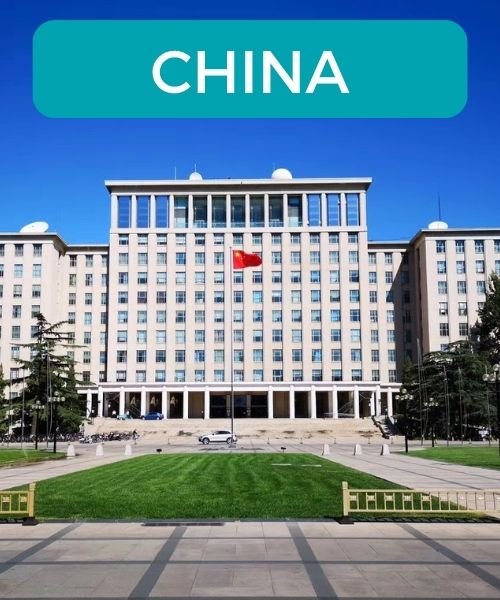
Benefits Of Studying In CHINA
- High-Quality Education: China offers globally recognized education with many top-ranked universities known for academic excellence, research, and innovation.
- Affordable Tuition Fees: Compared to many Western countries, tuition fees in China are relatively affordable, making it a cost-effective study destination.
- Low Living Costs: Accommodation, transportation, food, and daily expenses are generally lower than in many other international study destinations.
- Wide Range of Courses: Students can choose from a broad selection of programs in Medicine, Engineering, Business, Information Technology, Arts, and more.
- English-Taught Programs: Many universities offer programs in English, particularly in popular fields such as Medicine, International Business, and Engineering.
- Scholarship Opportunities: International students can benefit from funding options such as the Chinese Government Scholarship and university-based scholarships.
- Strong Research and Innovation Environment: China is a global leader in technology, manufacturing, and scientific research, offering excellent opportunities for practical learning and research exposure.
- Cultural and Language Exposure: Studying in China gives students the opportunity to experience Chinese culture and learn Mandarin Chinese, which can be valuable for global career opportunities.
- Career Opportunities: China’s growing economy offers internship and employment opportunities in sectors such as trade, technology, finance, and manufacturing.
- Global Networking Opportunities: Studying in China allows students to build international connections with peers, academics, and professionals from around the world.
Living & Working In CHINA
- Affordable Cost of Living: China offers a relatively affordable lifestyle compared to many Western countries. Costs for accommodation, food, transportation, and daily essentials can be reasonable, especially outside major cities like Beijing and Shanghai.
- Modern Infrastructure: China has advanced infrastructure, including efficient public transportation, high-speed rail networks, and modern urban facilities.
- Cultural Experience: Living in China offers exposure to a rich history, diverse traditions, and the opportunity to learn Mandarin Chinese.
- Student-Friendly Environment: Many universities offer international student support services, on-campus housing, and multicultural communities.
- Safe and Dynamic Lifestyle: Many Chinese cities offer a safe environment, vibrant city life, and access to modern amenities, entertainment, and cultural attractions.
- Growing Job Market: China has career opportunities in industries such as technology, manufacturing, education, finance, trade, and healthcare.
- Internship Opportunities: Many universities and companies offer internships that help students gain practical experience and industry exposure.
- Demand for International Talent: There is demand for skilled professionals, particularly in fields such as engineering, IT, teaching, international business, and research.
- Teaching Opportunities: Many international graduates find employment in English teaching and education-related roles.
- Career Growth Potential: China’s strong economy and global business presence provide opportunities for long-term career development, especially for professionals with language skills and specialized expertise.
Universities, Courses & Intakes
Top Universities Include:
- Tsinghua University
- Peking University
- Fudan University
- Shanghai Jiao Tong University
- Zhejiang University
- Wuhan University
- Nanjing University
Many of these institutions offer programs for international students in both Chinese and English.
Popular Courses in China
Medicine and Health Sciences
- MBBS
- Pharmacy
- Dentistry
- Public Health
Engineering
- Civil Engineering
- Mechanical Engineering
- Electrical Engineering
- Chemical Engineering
Business and Management
- International Business
- Finance
- MBA
- Marketing
Information Technology
- Computer Science
- Artificial Intelligence
- Data Science
- Cybersecurity
Arts and Social Sciences
- International Relations
- Chinese Language Studies
- Economics
- Architecture
Intakes in China
September Intake (Primary Intake)
- The main and most popular intake
- Offers the widest range of programs and scholarship opportunities
- Most international students apply for this intake
February/March Intake (Spring Intake)
- Secondary intake offered by many universities
- Available for selected programs
- Suitable for students who miss the September intake
Application Timeline
- Applications generally open 4 to 8 months before intake
- Early application is recommended, especially for scholarship consideration and visa processing.
Expenses In CHINA
Tuition Fees: Tuition fees in China vary depending on the university, course, and level of study.
- Undergraduate programs: USD 2,000 to 10,000 per year
- Postgraduate programs: USD 3,000 to 12,000 per year
- MBBS and medical programs: USD 4,000 to 15,000 per year
- Chinese language programs: USD 1,500 to 4,000 per year
Accommodation Costs: Housing expenses depend on the city and type of accommodation.
- University dormitories: USD 150 to 500 per month
- Shared apartments: USD 300 to 800 per month
- Private apartments: USD 500 to 1,500 per month
Living Expenses: Monthly living costs may include:
- Food: USD 150 to 300
- Transportation: USD 20 to 80
- Utilities and internet: USD 50 to 100
- Personal expenses: USD 100 to 300
Average living expenses generally range from USD 300 to 1,000 per month, depending on lifestyle and location.
Health Insurance: International students are generally required to have health insurance, which may cost around USD 100 to 200 per year.
Study Visa In CHINA
Types of Student Visas
International students planning to study in China generally apply for one of the following visas:
X1 Visa
- For students enrolling in programs longer than 180 days
- Suitable for degree programs such as undergraduate, postgraduate, and long-term language courses
- Requires conversion to a residence permit after arrival in China
X2 Visa
- For students enrolling in programs shorter than 180 days
- Suitable for short-term courses, exchange programs, and language studies
Eligibility Requirements
To apply for a student visa, you generally need:
- Admission letter from a recognized Chinese university
- Valid passport
- Completed visa application form
- Recent passport-size photographs
- Proof of financial support
- Foreigner Physical Examination Form (if required)
- JW201 or JW202 form issued by the university (commonly required for X1 visas)
Visa Application Process
- Apply and receive admission from a Chinese university
- Obtain the admission letter and JW201/JW202 form
- Complete the student visa application
- Submit documents to the Chinese Embassy or Visa Application Center in your country
- Attend an interview or provide biometrics if required
- Receive your visa decision
Residence Permit for X1 Visa Holders: Students entering China on an X1 visa must usually apply for a residence permit within 30 days of arrival, which allows legal stay for the duration of the course.
Processing Time: Visa processing times may vary but generally take 1 to 4 weeks, depending on the country and application volume.
Important Notes
- Apply well in advance of your intake date
- Ensure all documents are complete and accurate
- Check specific requirements with the Chinese Embassy or Consulate in your country before applying.
Career And Employment Opportunities
Growing Job Market: China has one of the world’s largest economies, offering career opportunities across diverse sectors for graduates and skilled professionals.
Technology and Information Technology
- Software Development
- Artificial Intelligence
- Data Science
- Cybersecurity
- Cloud Computing
Major technology hubs offer strong career prospects in innovation and digital industries.
Engineering and Manufacturing
- Civil Engineers
- Mechanical Engineers
- Electrical Engineers
- Industrial Engineers
- Automation Specialists
Business and Finance
- International Business
- Banking and Finance
- Supply Chain Management
- Marketing
- E-commerce
China’s role in global trade supports careers in multinational companies and export-driven industries.
Education and Teaching
- English Language Teaching
- International Schools
- University Teaching
- Education Consulting
Healthcare and Medical Fields
- Healthcare Administration
- Medical Research
- Pharmaceuticals
- Public Health
Areas Of Skill Shortage In CHINA
Information Technology and Digital Skills
- Artificial Intelligence
- Data Science
- Cybersecurity
- Software Development
- Cloud Computing
- Big Data Analytics
Engineering
- Mechanical Engineering
- Electrical Engineering
- Civil Engineering
- Automation Engineering
- Robotics Engineering
- Environmental Engineering
Healthcare and Medical Services
- Doctors and Specialists
- Nurses
- Medical Researchers
- Public Health Professionals
- Healthcare Technicians
Education and English Teaching
- English Language Teaching
- International School Teaching
- Higher Education Faculty
- Education Management
Advanced Manufacturing
- Industrial Automation Specialists
- Manufacturing Engineers
- Quality Control Experts
- Supply Chain Professionals
Finance and International Business
- Financial Analysts
- Accountants
- Risk Management Specialists
- International Trade Professionals
Renewable Energy and Sustainability
- Renewable Energy Engineers
- Environmental Scientists
- Energy Management Specialists
- Sustainability Professionals
Research and Innovation
- Scientific Research
- Biotechnology
- Semiconductor Technology
- Advanced Materials Research
Logistics and Supply Chain
- Logistics Managers
- Supply Chain Analysts
- Trade Compliance Specialists